UPDATE: Community thankful pipeline explosion wasn’t worse
Published 3:19 am Thursday, February 5, 2026
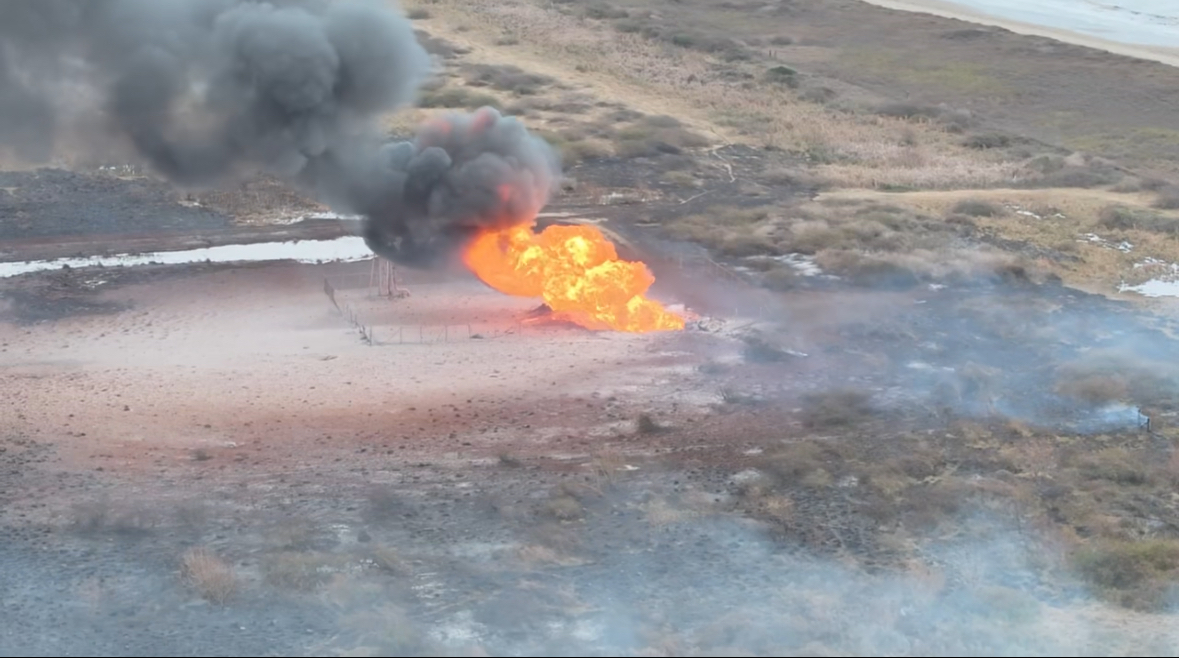
The Office of Emergency Preparedness in Cameron Parish said Tuesday’s pipeline explosion could have been a lot worse.
The Cameron Parish Sheriff’s Office received the call reporting the explosion shortly after 11 a.m.
Routing maintenance was being performed on the Delfin LNG pipeline at 575 Gulf Beach Highway near Johnson Bayou and Holly Beach when a 42-inch line ruptured leaving one worker — an operator for Delfin — injured. The worker was transported to a hospital in Port Arthur, Texas.
Louisiana State Police are conducting an investigation to find the cause of the accident. The Cameron Parish Sheriff’s Office was first on the scene.
Louisiana State Police Hazmat crews responded and arrived shortly after 12:30 p.m. and remained at the scene until 4 p.m. The Louisiana Department of Environmental Quality and Johnson Bayou-Holly Beach Fire Department were also at the scene. No offset impacts or road closures were made due to the incident.
Trooper Roy Jones, Louisiana State Police Troop D public information officer, said state, local and federal agencies are working together on the investigation.
“Yesterday shortly after 11 a..m. first responders were notified in reference to an explosion in Cameron Parish. One individual suffered minor injuries and was treated at a nearby hospital, there was no shelter in place, no evacuations or offsite impacts from yesterday’s event. Johnson Bayou High School did place themselves under a precautionary shelter in place,” Jones said.
Ashley Buller, assistant director for the Cameron Parish Office of Homeland Security and Emergency Preparedness, said, “Our office is just happy right now that we have so many agencies that work together on events like this because it could have been a lot worse and it’s unfortunate that even one person was near the sight but we’re very lucky that it wasn’t a lot worse.”
Cameron Parish School Board Superintendent Charley Lemons said he received a call from Sheriff Chris Savoie at 11:30 a.m. and from that moment until 2:30 p.m. a precautionary shelter in place for Johnson Bayou High School. It was later lifted due to the fire being out.
Anne Rolfes, director for the Louisiana Bucket Brigade, said every minute of every day, countless corporations pump oil, gas and chemicals across Louisiana via pipeline. That means at any given moment, a Louisiana community could be faced with a leak, an explosion, or contamination of their air, land, or water.
“The industry likes to use marketing terms like ‘natural gas’ to make their products seem benign but today’s explosion and ongoing fire are a stark reminder that what they’re selling is highly combustible methane gas — a volatile fossil fuel,” Rolfes said.
“Before approving the next pipeline, LNG export terminal, or CCS project, Gov. Landry and state regulators should remember today’s incident and what these projects cost our communities,” Rolfes said. “All of us at the Louisiana Bucket Brigade are hoping for a speedy recovery for the worker who was injured and a safe return home for the students sheltering in place today.”
James Hiatt, director of For a Better Bayou, said it was jarring to see the smoke-filled sky Tuesday afternoon and the community should be thankful this wasn’t a massive 48-inch gas pipeline like those now being built across Southwest Louisiana.
According to Hiatt, a major natural gas pipeline incident occurs in the United States roughly every 40 hours and the explosion on Tuesday in Johnson Bayou is a reminder of the danger of running pipelines including carbon dioxide lines through places where people live, work and play.
“One thing is always true about pipelines, they carry inherent risk and when something goes wrong the consequences can be severe. If regulators are serious about safety, these lines must be kept well away from homes and sensitive ecosystems, not rushed through an expedited path for corporate convenience,” Hiatt said.
The Habitat Recovery Project spoke out in regards to the explosion saying Tuesday’s explosion on the Delphin LNG Pipeline is a reminder that even offshore LNG Projects — whose terminals sit 40 miles out in the Gulf — still rely on onshore infrastructure that puts coastal communities at risk.
“Explosions are frightening, but it’s important to understand that the slow, daily pollution from these facilities often poses an even greater long-term risk to human health,” Alyssa Portaro, executive director of Habitat Recovery Project, said. “Protecting our communities means addressing both the disasters we can see and the pollution we live with everyday.”